Student Matinees
We invite middle and high school students in NYC to experience the power of live performances through immersive, multi-faceted matinees at Harlem Stage, serving over 4,500 New York City students this season. These 2.5-hour engagements offer an in-school pre-show workshop, a performance at Harlem Stage, and a post-show artist Q&A, helping students make connections between artistic expression and contemporary social issues from the point of view of artists.
Pre-Show Workshops
Before the curtain rises at Harlem Stage, students step into an immersive, one-hour pre-show workshop designed to ignite curiosity, deepen understanding, and activate their own creative voices. Led by professional teaching artists, these interactive sessions introduce students to the themes, historical context, and artistic forms of the performance they are about to experience. Through movement, storytelling, visual art, or spoken word, students engage with the material in a hands-on, age-appropriate way—connecting art to identity, culture, and social impact. These workshops not only prepare students to watch with intention—they empower them to see themselves as part of the artistic dialogue.
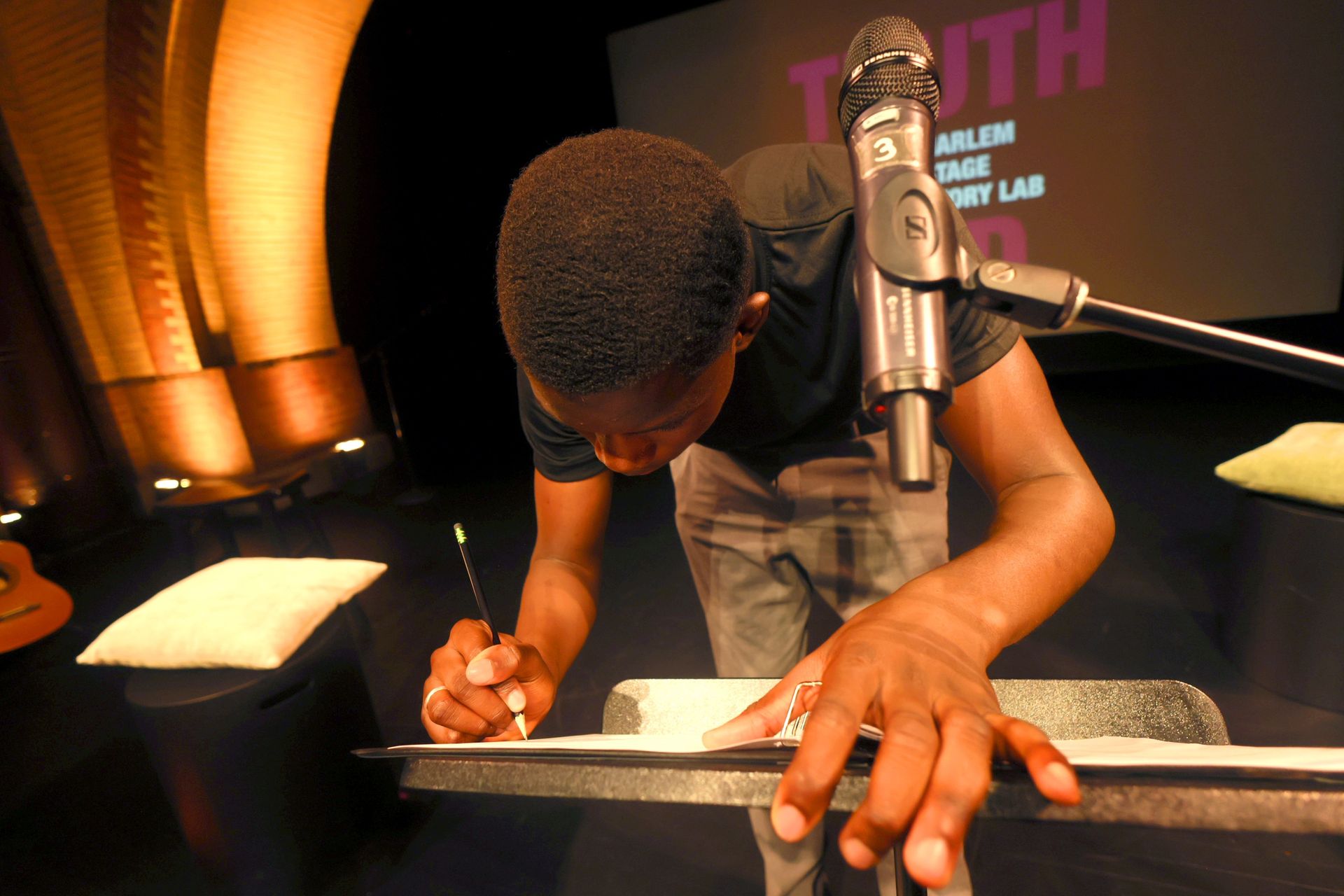
Truth Be Told Story Lab
In an era when injustice continues to cast its long shadow, Truth Be Told offers a sanctuary for high school and HBCU students to write themselves into existence—transforming their lived experiences into profound expressions of power, resistance, and truth. This after school writing residency is more than a creative exercise; it is a call to action, an invitation to shape narratives that have too often been silenced or erased. Truth Be Told is a three to four week after school program that creates space for students to explore the delicate interplay of identity, history, and personal story, to confront the complexities of identity and belonging through the written word. The story lab will also provide students a performance opportunity at Harlem Stage, where students will share their work with an audience of peers, educators, families, and the community—a collective moment of reflection, celebration, and solidarity.
Curriculum Guides
Each Harlem Stage education program is accompanied by thoughtfully written and designed curriculum guides that serve as bridges between the classroom and the stage. Rooted in NYC’s Blueprint to Teaching and Learning in the Arts, these guides offer educators rich, interdisciplinary tools to deepen student engagement before and after each artistic experience. Each curriculum guide is created in two voices—one to equip teachers with tools for meaningful instruction, and one to invite students into a journey of exploration, reflection, and creative response.
Featuring historical context, artist biographies, guided discussion questions, vocabulary, creative writing prompts, lesson plans, and project-based learning activities, the guides empower teachers to spark critical dialogue and link performance themes to broader subjects—such as history, literature, civics, and social justice. With a focus on inquiry, identity, and creative expression, the curriculum guides support diverse learning styles while encouraging students to think deeply, feel widely, and respond artistically to the world around them.
IMPACT
Harlem Stage has reached over 100,000 students and counting…
A growing body of research confirms that sustained engagement in the arts cultivates a set of highly transferable skills—skills that are increasingly recognized as essential across professional sectors. Students immersed in artistic practice develop critical thinking, adaptability, emotional intelligence, and collaborative problem-solving—competencies that drive innovation and leadership in business, technology, education, public service, and beyond:
- Communication and Public Speaking:
Performing on stage hones excellent delivery, articulation, and the ability to project confidence in front of an audience, crucial for presentations and client interactions in business. - Collaboration:
Working as part of a workshop or a production requires seamless collaboration, effective communication, and the ability to adapt to different personalities, which translates to teamwork in the workplace. - Critical Thinking and Problem-Solving:
Analyzing scripts, understanding character motivations, and navigating complex stage directions develops critical thinking skills to analyze situations and find solutions in business. - Adaptability and Resilience:
Dealing with unexpected changes during workshops, rehearsals and performances builds the ability to adjust to new situations and handle pressure in a fast-paced business environment. - Empathy and Emotional Intelligence:
Understanding and portraying diverse characters allows students to develop empathy, which can be vital for building rapport with clients and colleagues. - Project Management:
Organizing rehearsals, managing props, and coordinating with different departments on a production equips students with project management skills to oversee tasks and deadlines in a business setting.